POTENTIAL ROOFING PROBLEMS
Notice something on the roof you aren't
sure is a problem?
Things to look out for
Timely identification and swift resolution of roofing issues are crucial in safeguarding the integrity of your home. Neglected problems can escalate into leaks that permeate your roof and attic, potentially resulting in significant property damage and fostering the growth of harmful mold and mildew.
If these concerns are allowed to linger, they can ultimately precipitate substantial structural and foundation complications, leading to costly repairs and compromising the safety of your living space. Taking proactive measures today can save you from more extensive troubles tomorrow.
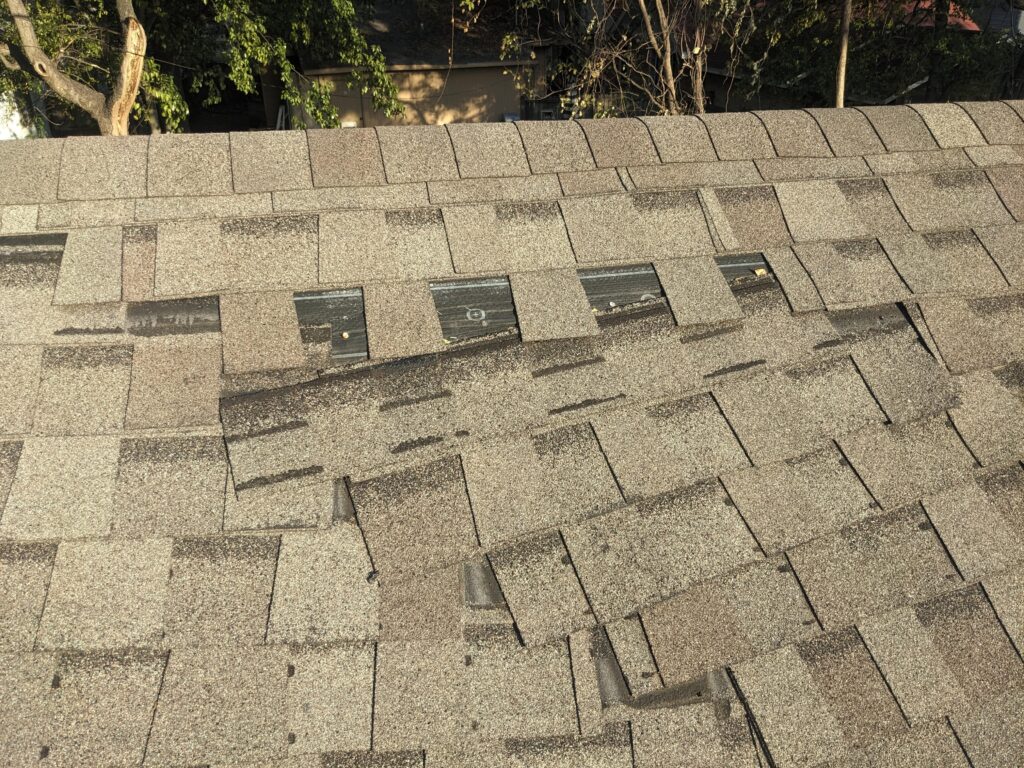
Identifying Wind Damaged Shingles
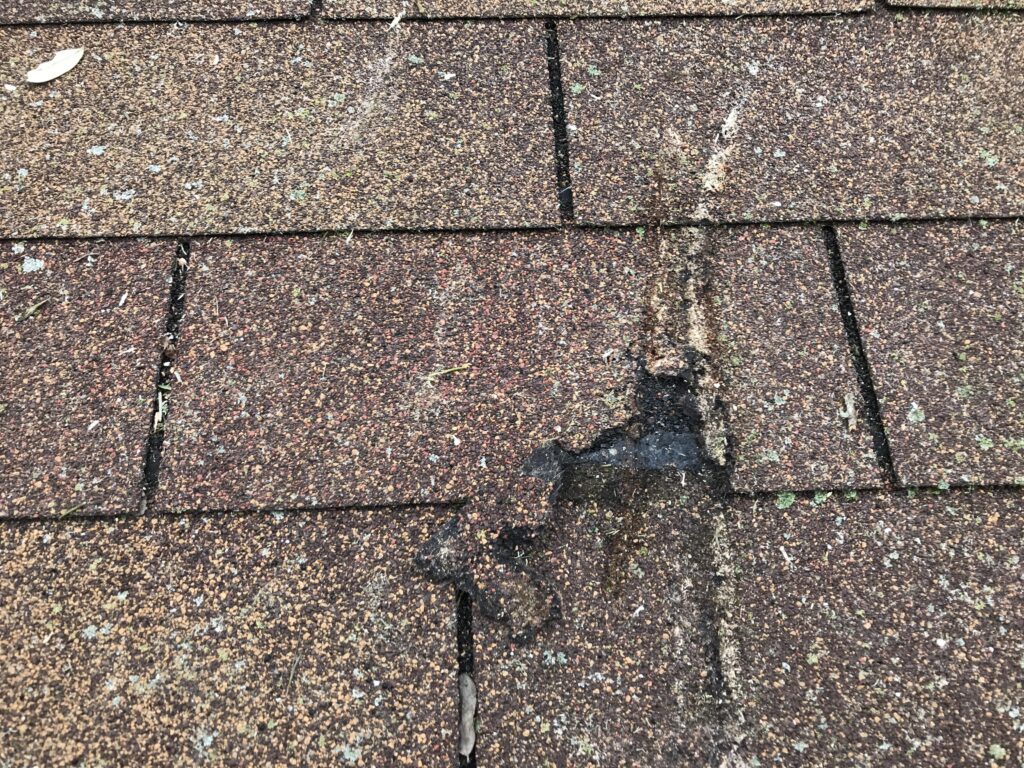
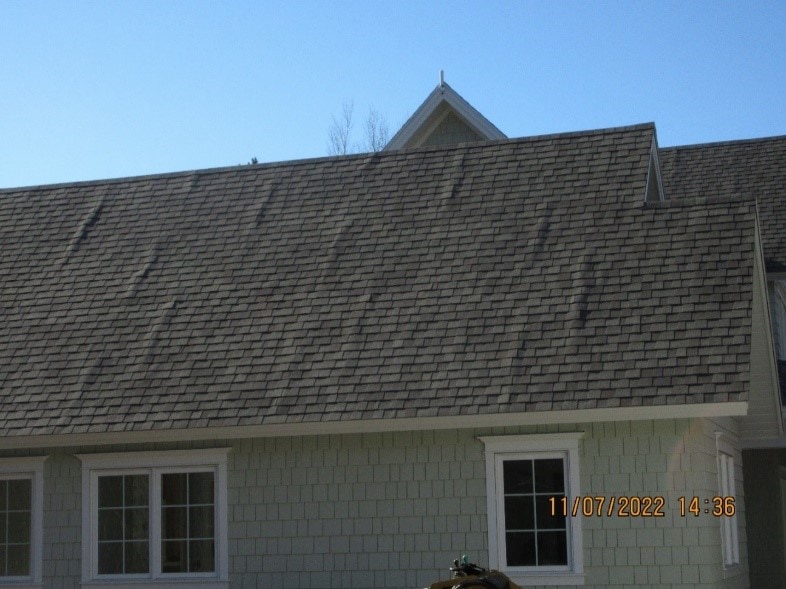
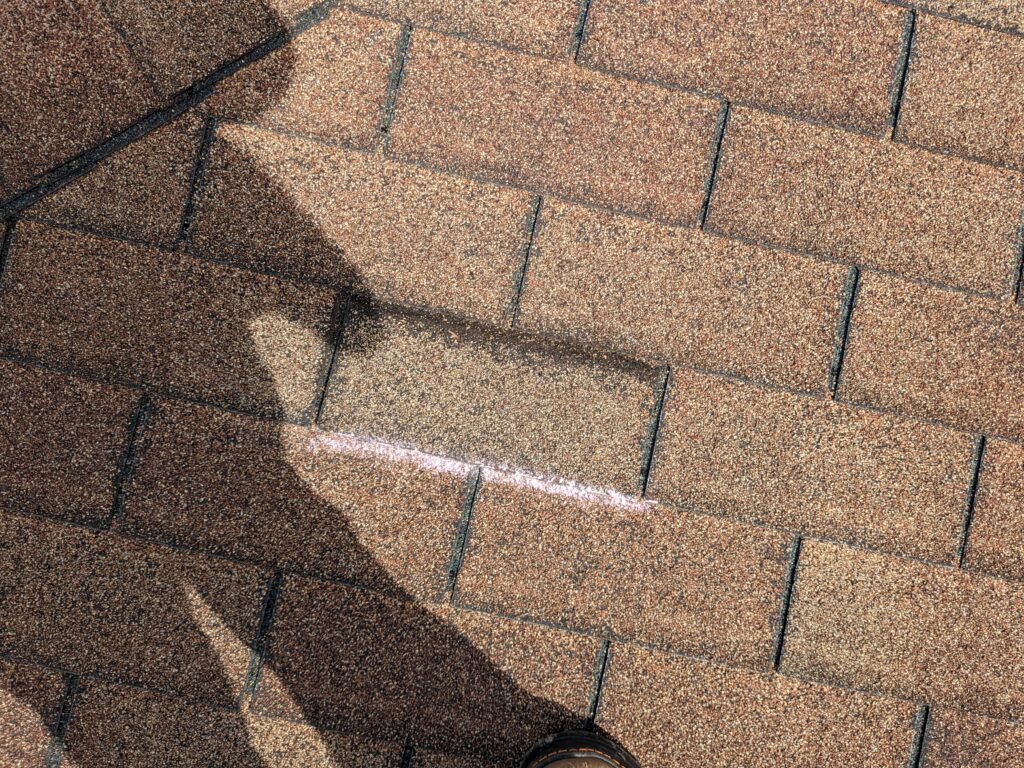
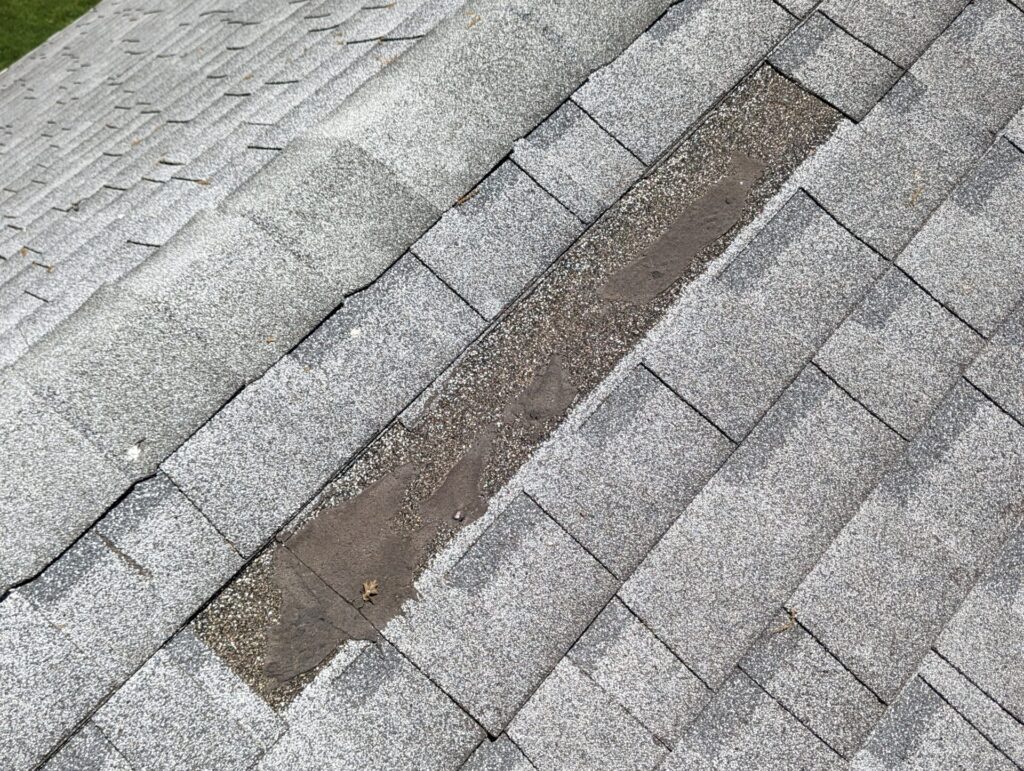
- Visual Inspection Up Close: An early sign of a wind damaged shingle is a visible line or “crease” across the shingle, typically located near the base of the tab. This crease may look slightly lifted, discolored, or cracked.
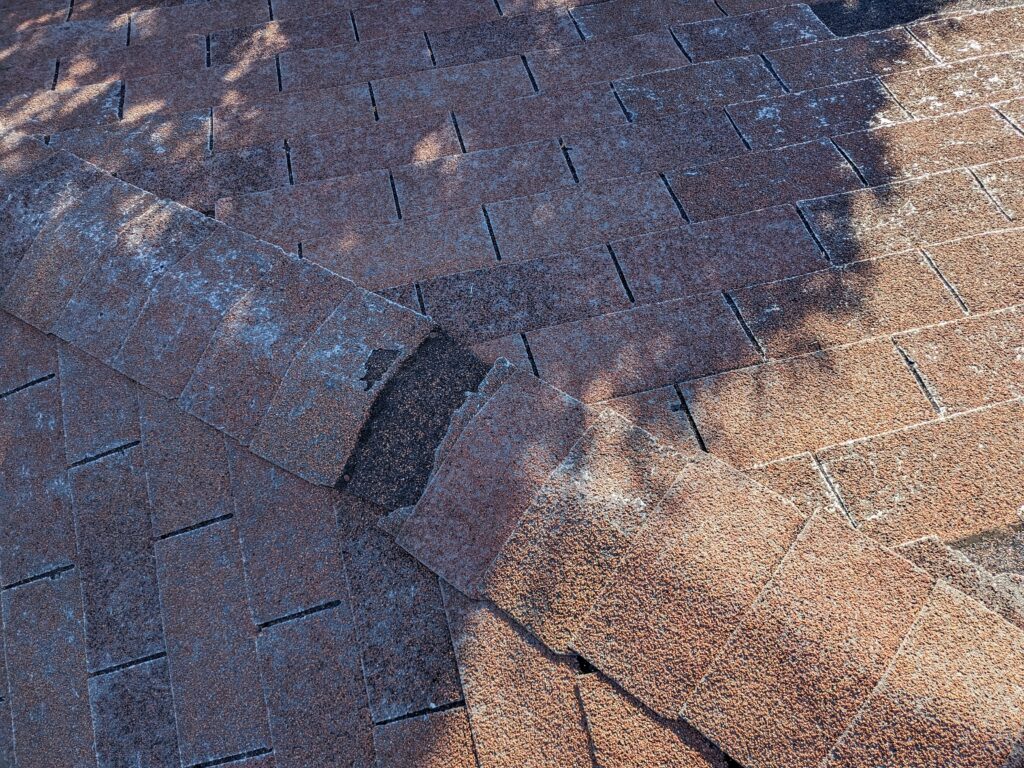
- Check for Curling or Lifting Edges: Wind-creased shingles may have edges that are slightly raised or curled, a sign that they were lifted by the wind and are now loosely attached.
- Signs of Granule Loss: Wind stress can cause granule loss along the creased line, exposing the asphalt and making the crease appear shiny or darker than the rest of the shingle.
Why it matters
- Weakened Structural Integrity: A crease line creates a weak point, making the shingle more susceptible to breaking or tearing under subsequent wind pressure.
- Reduced Adhesion: Once a shingle lifts and creases, it may not properly reseal, which means the shingle edges are more vulnerable to being caught and lifted by the next wind event.
- Increased Flapping: Wind-creased shingles can flap or vibrate under the wind, exacerbating the damage and potentially loosening neighboring shingles, making them more likely to detach.
Wind-creased shingles may seem minor, but they present a significant risk for further damage and water intrusion, highlighting the importance of regular inspections, particularly after strong winds.

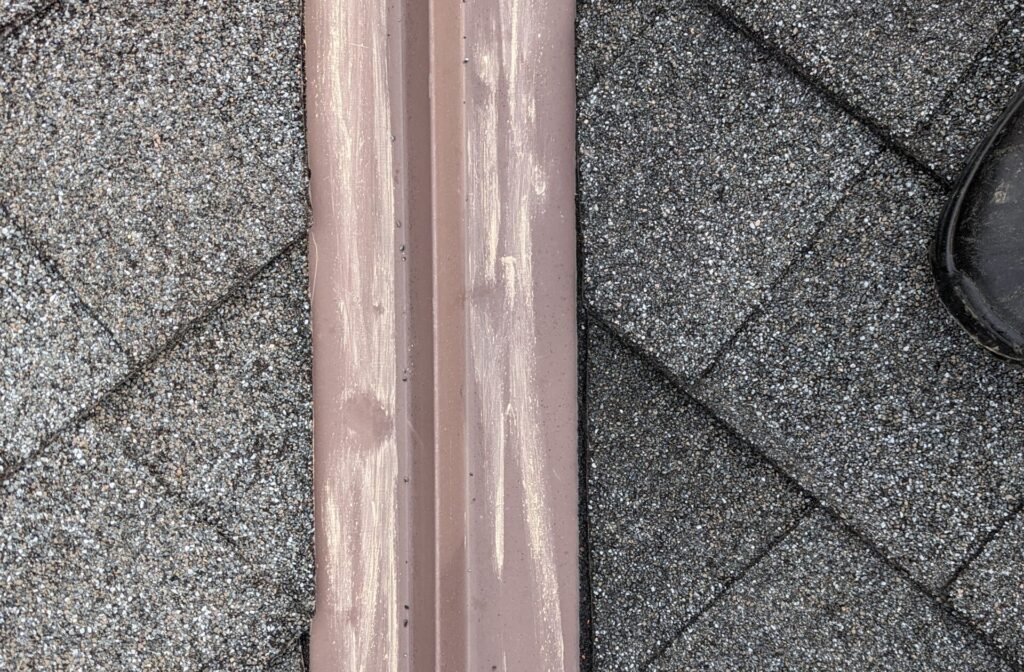
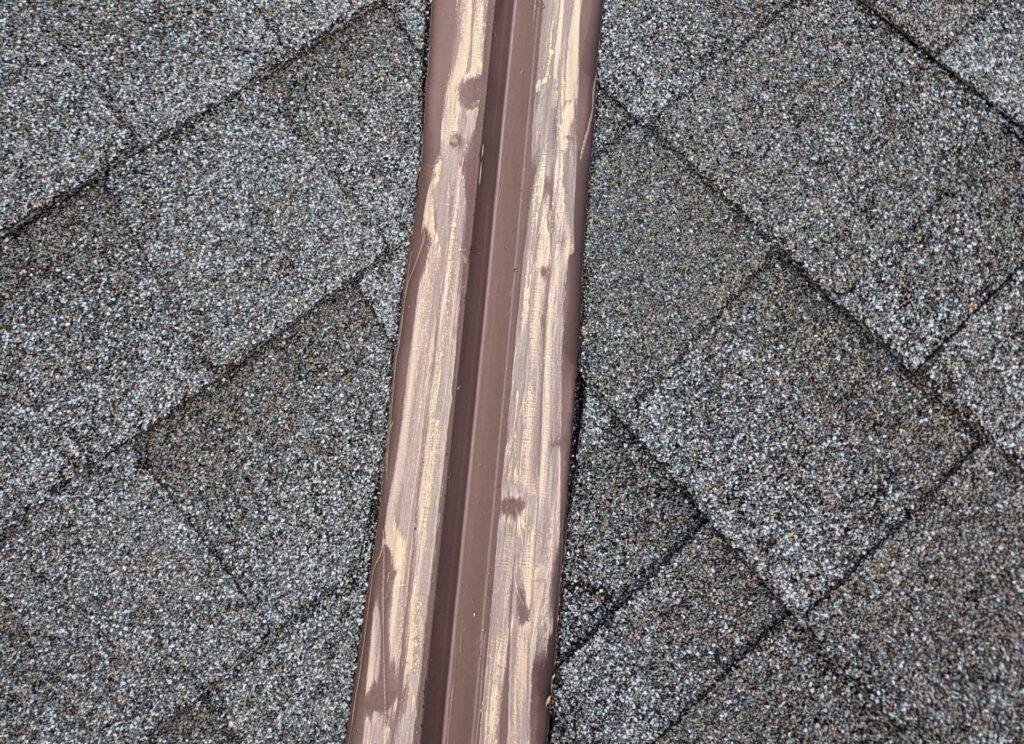
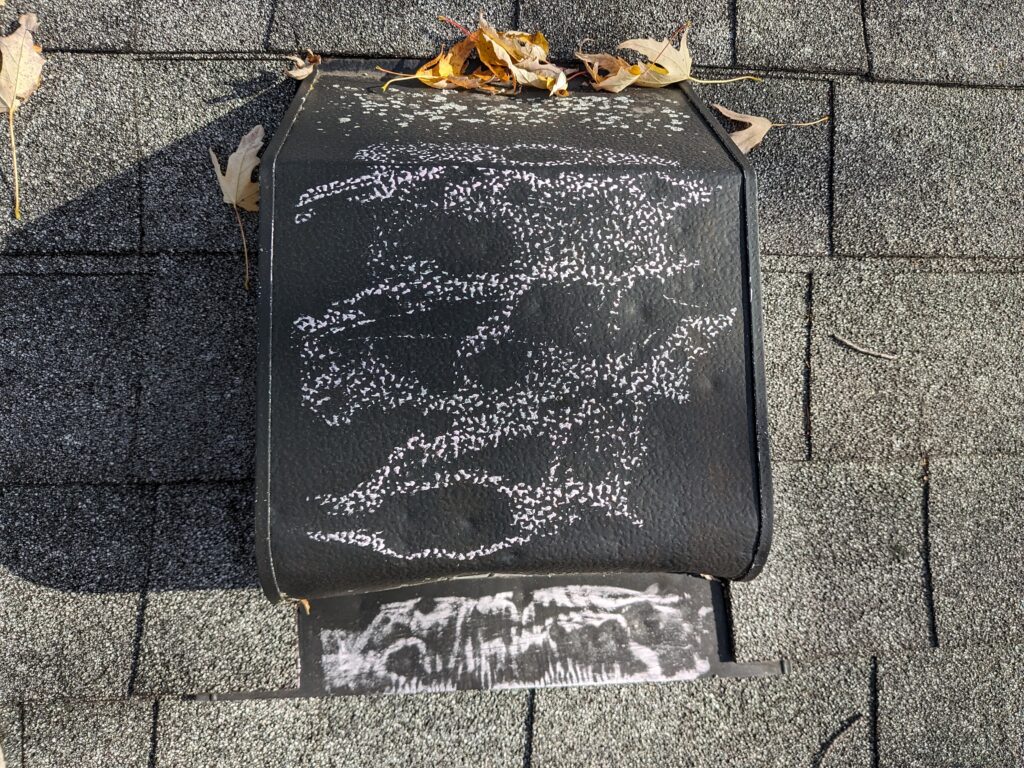
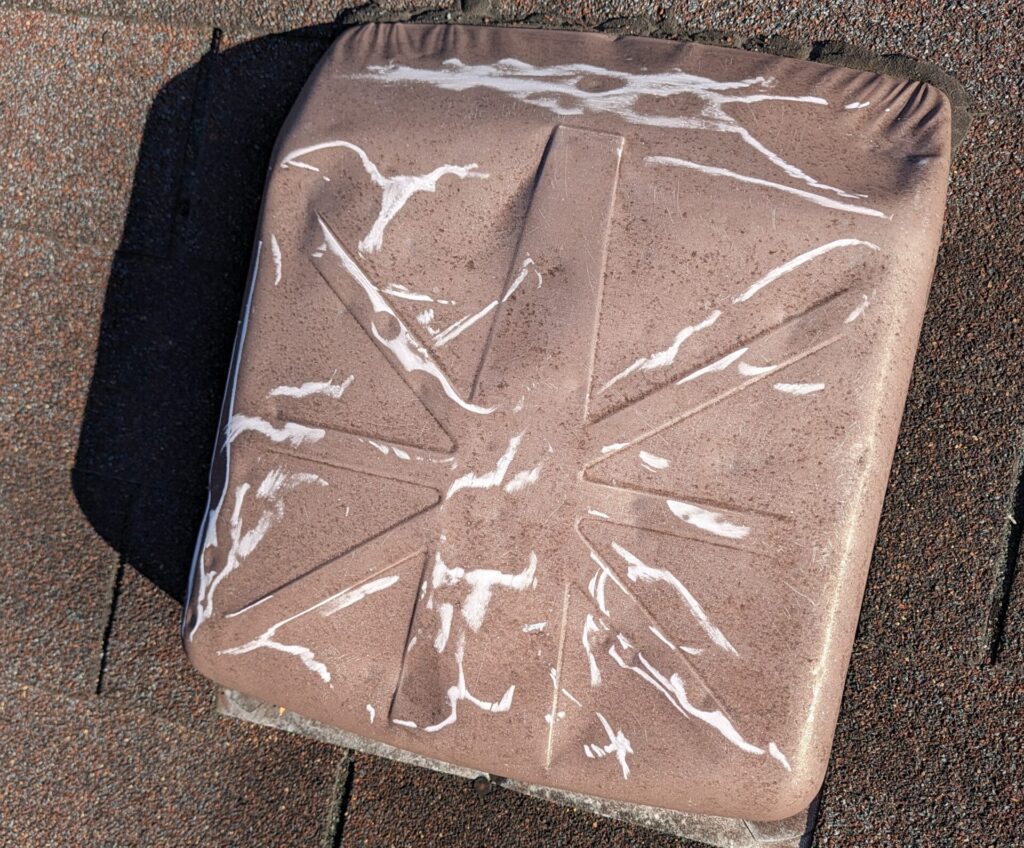
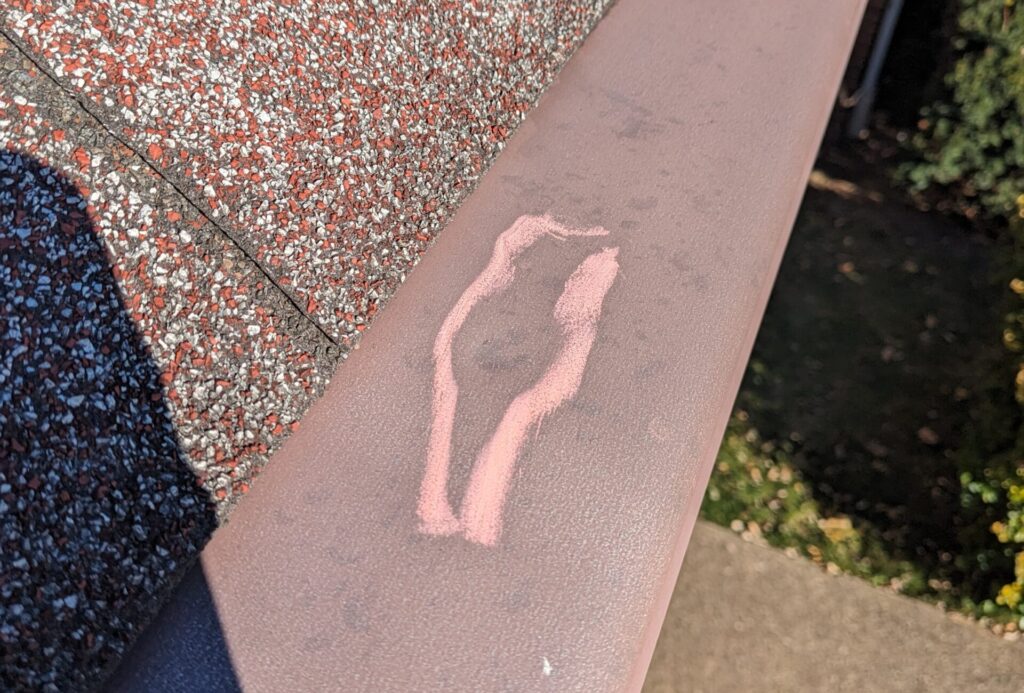
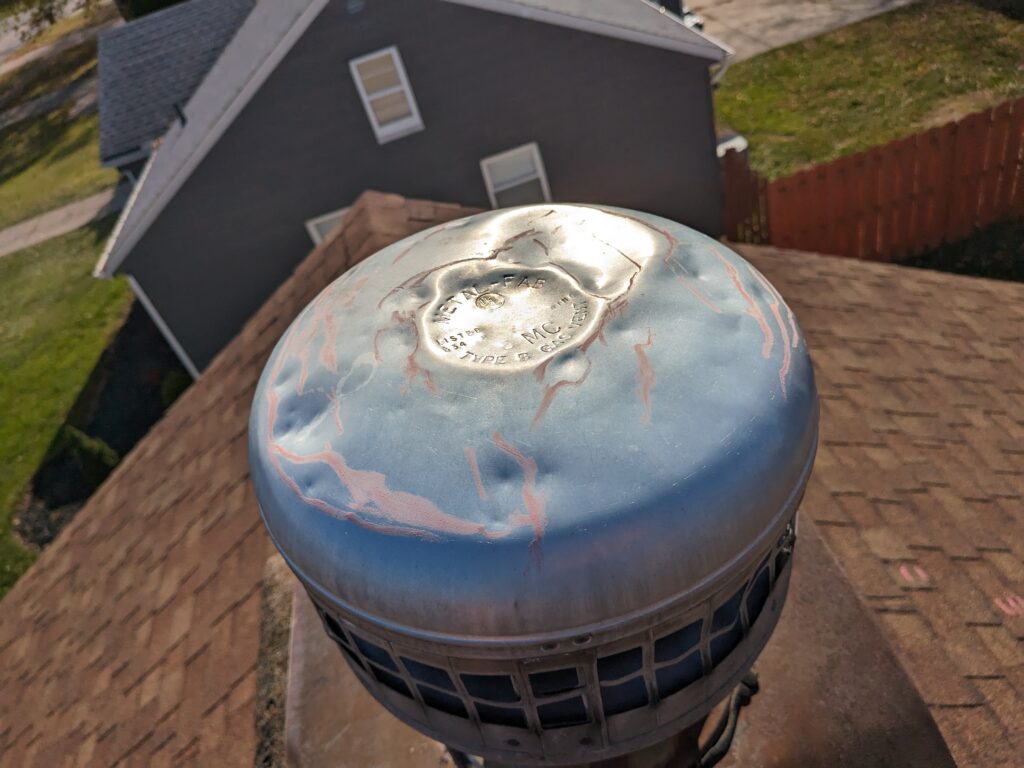
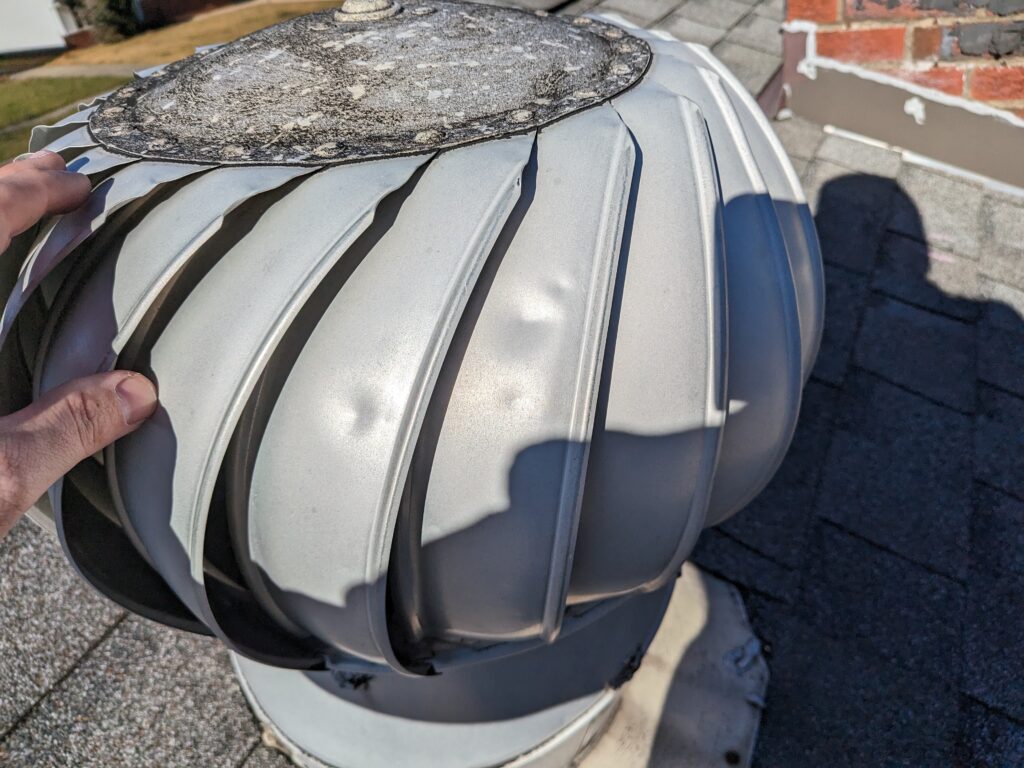
Identifying Hail Damage to Gutters, Metal Components, and Shingles
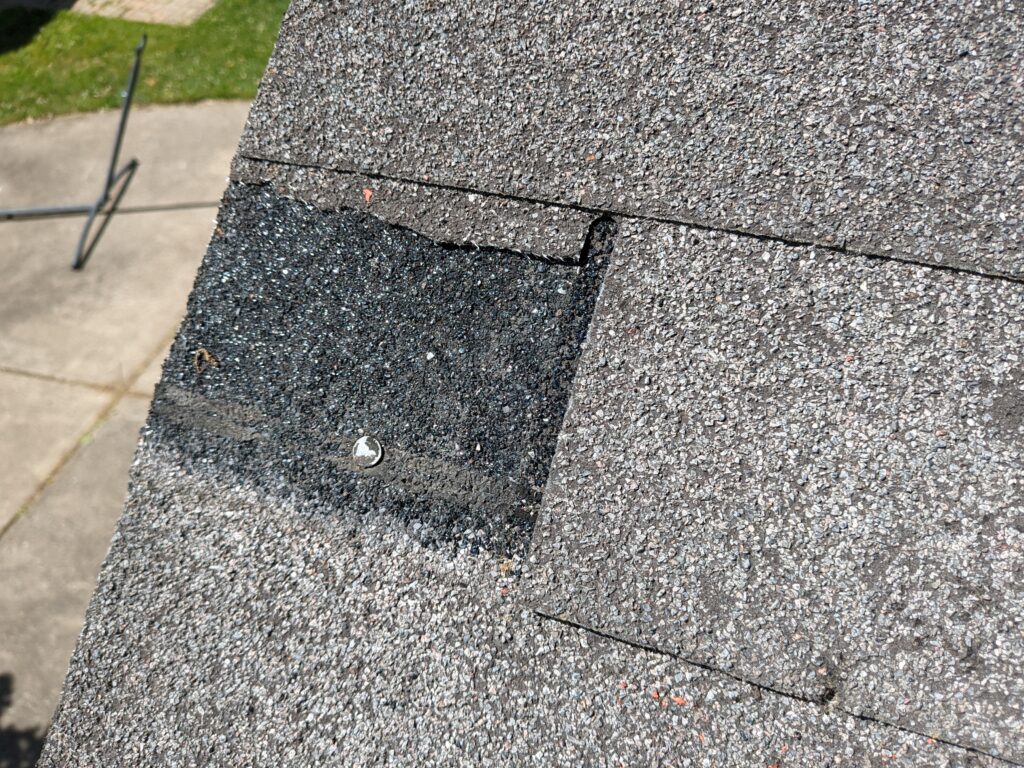
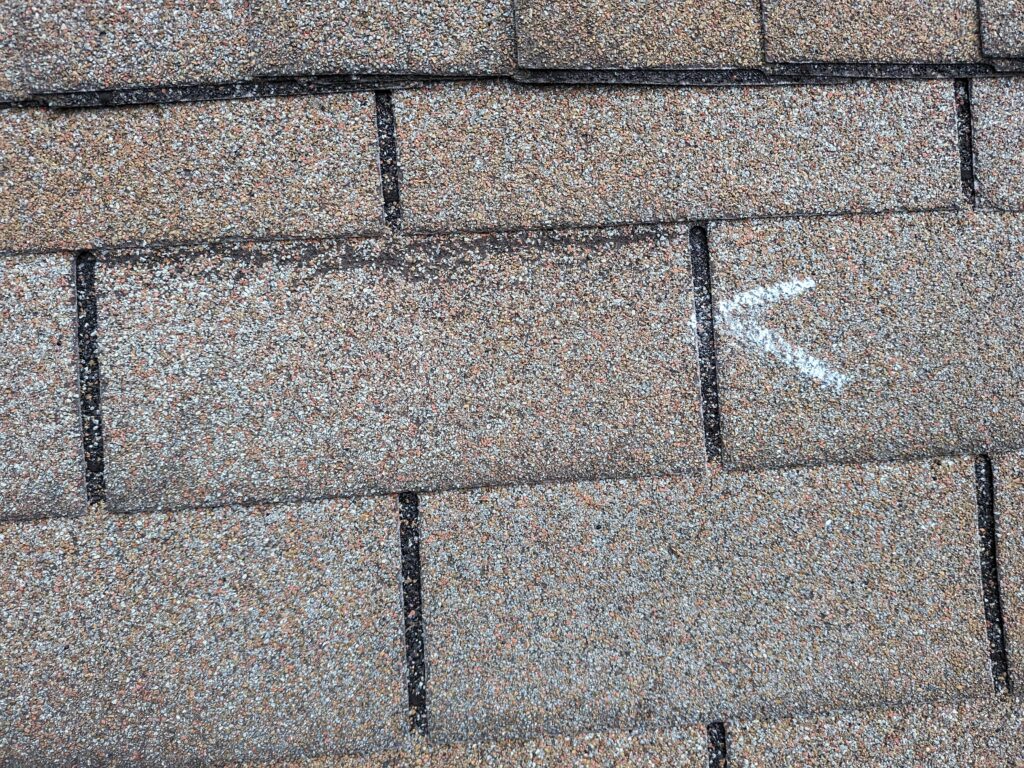
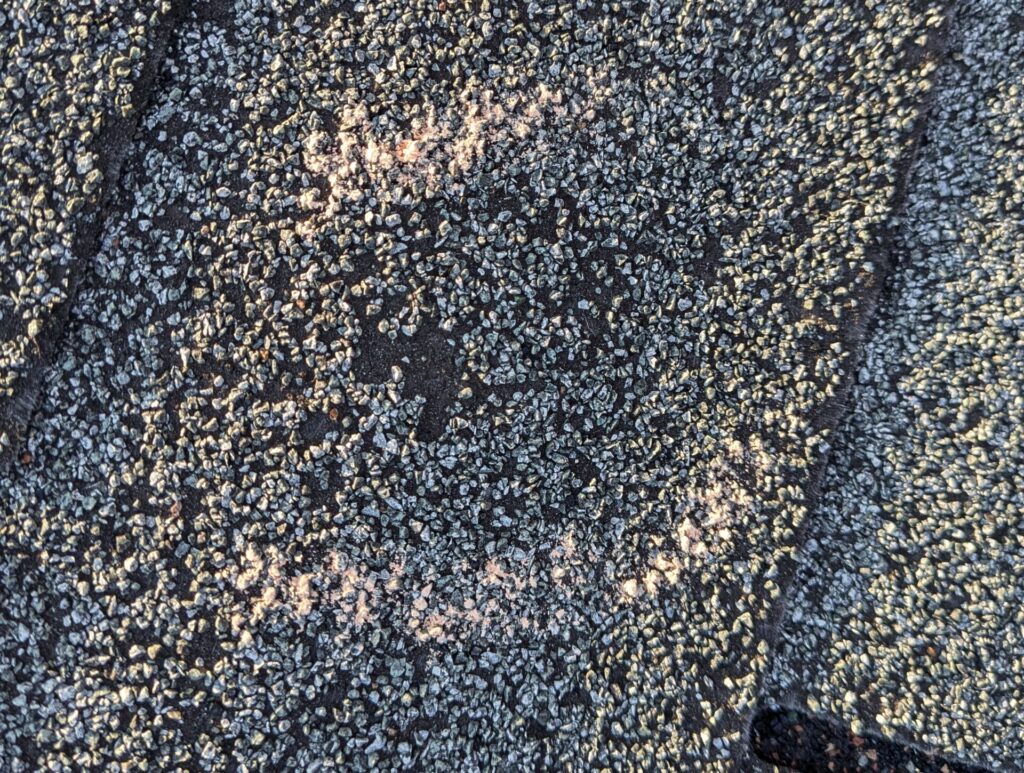
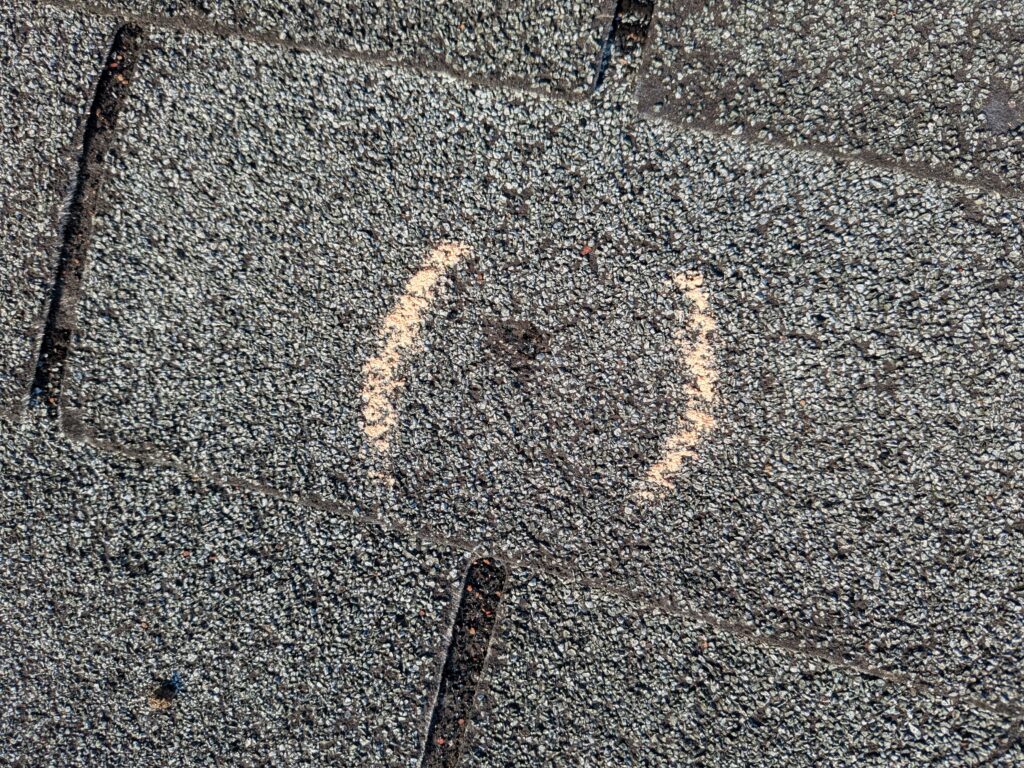
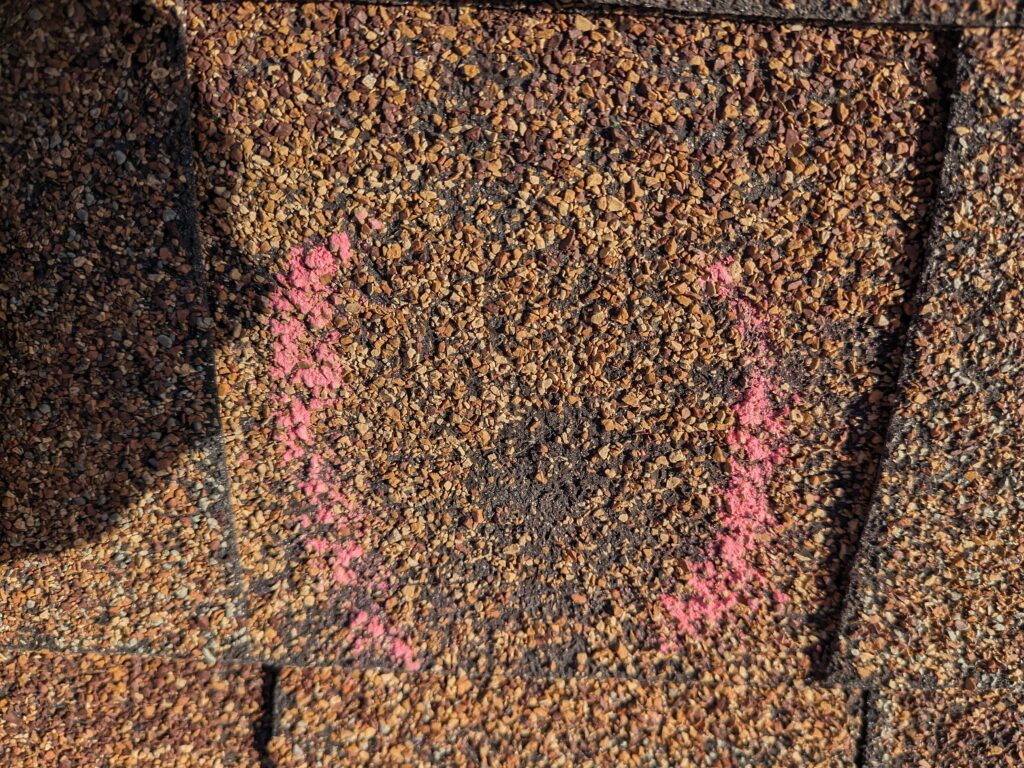
Surface Dents, Distortions, and Granule Loss: Closely inspect the gutters, and metal on the roof for any subtle dents, dimples, or areas where the metal surface appears uneven. These dents can often be hard to spot from ground level and may require close inspection or the use of a flashlight to highlight irregularities. Shingles will have a loss of granules.
Check for Paint or Coating Damage: Look for chipped paint, exposed metal, or small scratches, which can indicate hail impact. Damaged coatings make the metal more vulnerable to rust and further deterioration.
Gutter Performance Issues: Observe any changes in gutter function, such as water pooling or slow drainage, which can indicate hidden deformations impacting water flow.
Why it matters
Water Flow Disruption: Dents in gutters and metal can alter the natural flow path for water, creating areas where water may pool or move more slowly. This pooling can lead to blockages, increased wear, and even overflow during heavy rain.
Increased Corrosion Risk: When hail damages the protective coating on metal box vents, turbines, or gutters, the exposed metal is vulnerable to rust. Rust weakens the structural integrity of these components, leading to holes, leaks, and eventual metal failure.
Risk of Leaks and Water Intrusion: Damage to metal and shingles can create small gaps or weak points where water can seep through, potentially causing leaks into the roof deck or attic. Similarly, deformed gutters can allow water to spill over the sides, causing erosion or damage to the home’s foundation and landscaping.
Regular inspections and prompt repairs or replacements help avoid larger, more costly repairs to the attic and roofing system down the line.
Other Common Damage
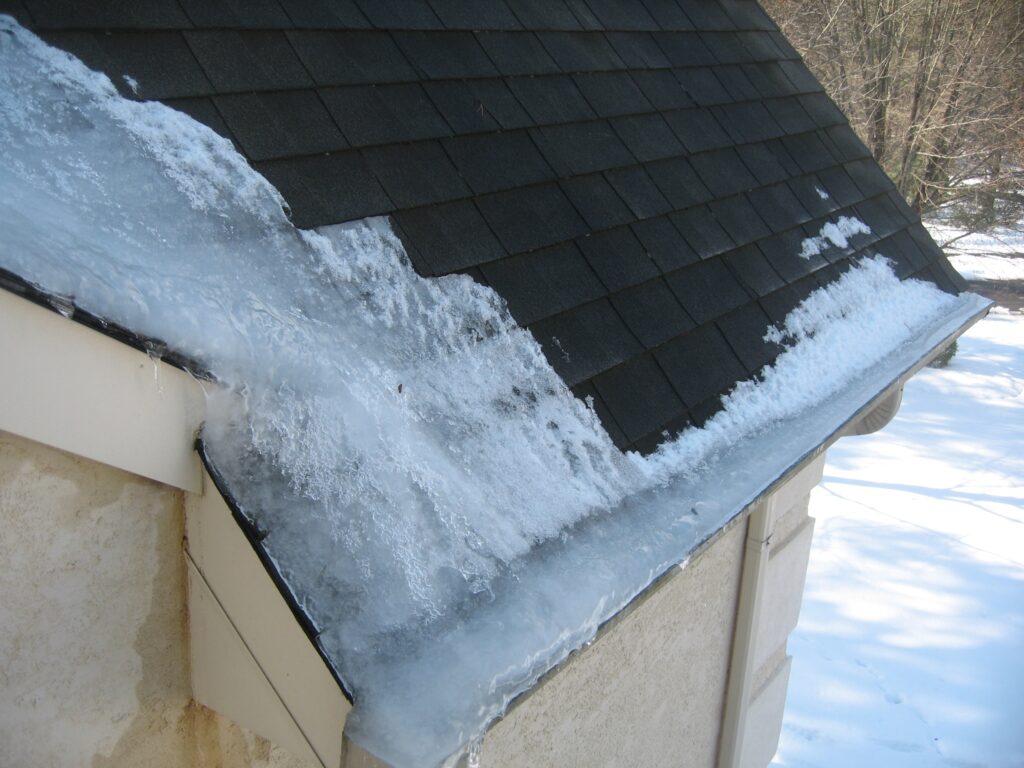
Identifying Ice Dam Damage to Gutters
- Gutter Separation or Sagging: The weight of ice dams can pull gutters away from the fascia board, causing them to sag or detach.
- Cracked or Bent Sections: Ice expansion can cause stress fractures, bends, or distortions in metal gutters.
- Leaks and Water Stains: Water backup from ice dams can seep into fascia boards, leading to visible staining, rotting wood, or interior leaks.
Identifying Animal Damage to Gutters
- Gnaw Marks & Chewed Sections: Small teeth marks, holes, or chewed gutter guards indicate rodent activity.
- Visible Nesting Materials: Leaves, twigs, or debris in the gutters can be a sign of bird or squirrel nests.
- Loose or Detached Gutters: Large animals pulling on gutters may cause them to loosen or sag, affecting drainage.